
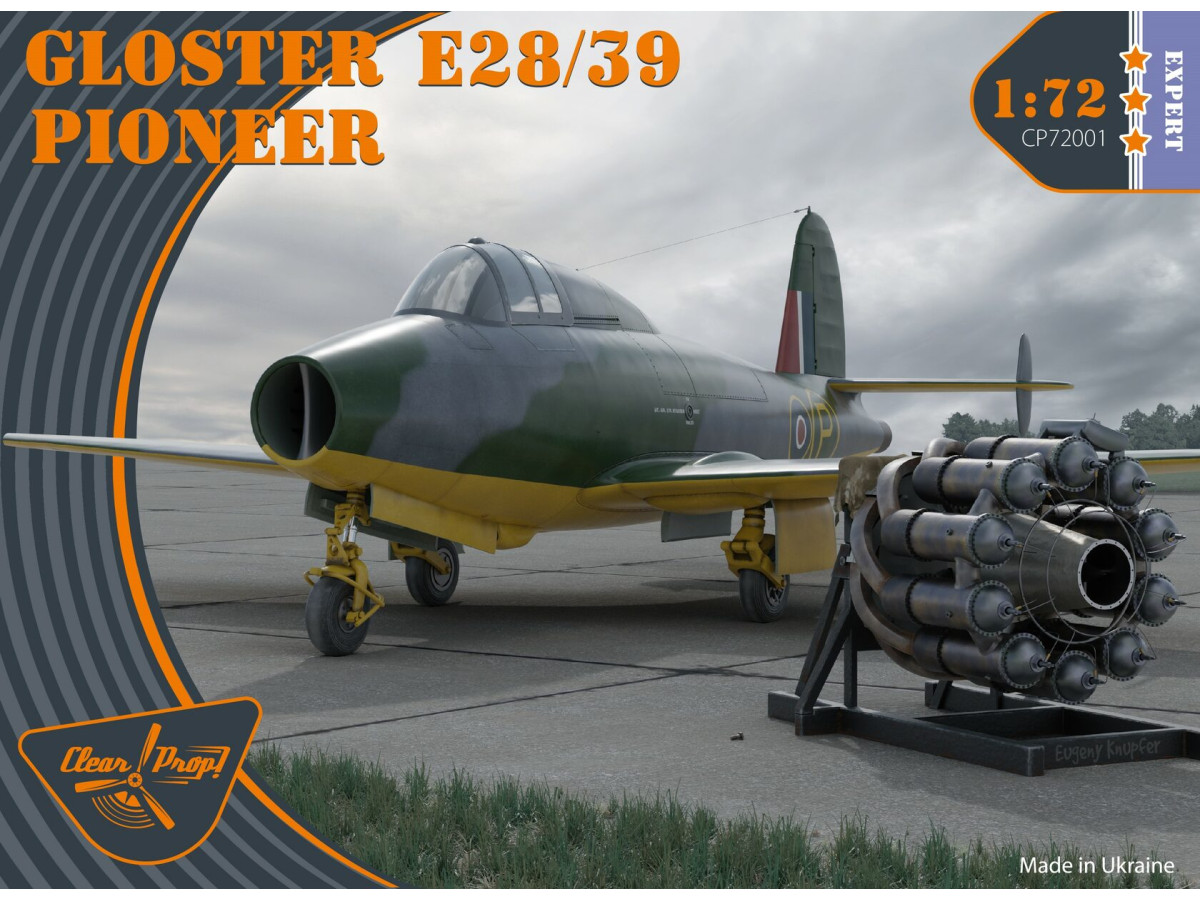
Frank Whittle developed a turbine engine for potential use in aircraft back in the mid-1930s. Teaming up with Gloster Aircraft Company, they developed the E28/39 proof-of-concept aircraft that housed Whittle's engine and proved the feasibility of turbine-powered flight. While the E28/39 first flew in 1941, Ernst Heinkel had developed a similar proof-of-concept aircraft powered by a German-designed engine that flew in 1939, and Caproni flew an Italian turbine concept in 1940. The Whittle and the German initial concepts were based on centrifugal compressors with gas turbine power, while the Caproni design used a motor-jet engine (a compressor powered by a piston engine). The motor-jet would appear a few more times around the world before being abandoned, and the Germans set aside the centrifugal compressor in favor of axial-flow jet engines. Whittle would eventually get the RAF's attention with the Gloster Meteor becoming Britain's first turbine-powered fighter. Centrifugal compressors were later abandoned in favor of axial flow as the power produced by a centrifugal compressor engine was eventually limited by its size and weight. More power required a larger diameter compressor which meant more weight and larger-diameter fuselages or nacelles.
30 august 2025 (21:07)
Comments: 0
Views: 119

Write a comment